
Gympie Mining Accidents – 1800s – Part 1
Whilst mine safety would have been at the forefront of most Gympie Mine Manager’s minds, there were many accidents in and around the mine shafts and quite a few proved to be fatal. Each death was thoroughly investigated and the newspapers of the day published (sometimes in very graphic and detailed reports) the findings of the inquiries and these reports will be featured in a series of Blog posts with this one being Part 1.
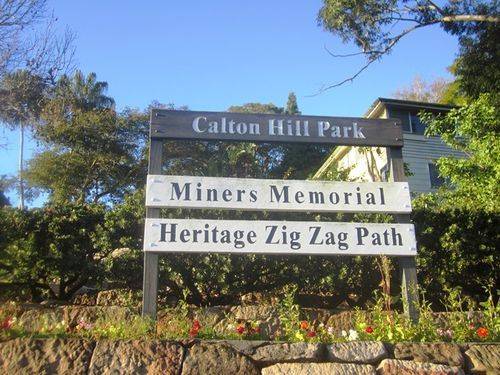
The miners are remembered on a Memorial on the Zig Zag Path in Gympie and the names featured in Part 1 are: Jonathan Brewitt; James McKeon; Frederick Stable; William Fischer; Joseph Riley; William Crawford Albert/Alburt;
Fatal Mine Accidents Gympie
Jonathan BREWITT
I am sorry to have to record a mining accident, resulting in death. A man named Jonathan Brewitt, working at the Band of Hope claim, whilst landing a bucket, fell down the shaft. No one saw him fall, but the manager, who was in the smithy, heard the splash, ran out to the brace, and found Brewitt gone. He called another man from the smithy and the boy that was driving the whip-horse, rigged the windlass, and lowered the boy to the surface of the water to catch Brewitt as he rose, but as Brewitt had received a blow on the head in falling that stunned him, he did not rise. At the time of the accident they were bailing. The shaft is 35ft deep, and had about 12ft of water in it at the time. It seems strange that the parties present did not think how easy it would have been for one of them to descend by the rope to the bottom and lift the man to the surface of the water. Had that been done the man’s life would, in all probability, have been saved. In place of doing this they continued baling for an hour until the water was down to 4ft. Of course all that was done then was to bring up a corpse.
GYMPIE WARDEN’S REPORT.
Maryborough Chronicle, Wide Bay and Burnett Advertiser (Qld. : 1860 – 1947) Tuesday 12 August 1884
McKEON, James
ANOTHER FATAL MINING ACCIDENT
The third fatal mining accident within the short space of eight days, happened early on Wednesday morning in the shaft of No.1 South Eastern Glanmire (True Blue), the victim being a minor named J. McKeon. We have gathered the following particulars of the sad affair from Mr. J. McAuliffe, the manager of the claim: On going to work at 8 o’clock that morning McKeon was lowered down the shaft, and told to start and drill a hole in the bottom; the other man, Hurley, was instructed to sharpen drills until the manager’s return, he having to go away to look after some timber. On returning to the shaft about an hour afterwards the manager was met by a man named Donovan, who stated that a man had fallen down the shaft. It appears that in the interval McKeon had come up from below, and sent Hurley- a young man of about nineteen years to fill the buckets and send up stuff, himself taking the windlass. No one saw the accident, but it is supposed that, in landing the bucket, McKeon must have slipped, as he and the bucket were precipitated down the shaft. The shaft is about 40feet in vertical depth, the remaining twenty feet being on the underlie of the reef, which is very flat. After striking on the top of the underlie the unfortunate man rolled down it about nine feet when he was stopped by one of the crosspieces. He was brought to the surface as speedily as possible, and Dr. Webster was shortly in attendance ; but the injuries were of such a serious character, including a fractured skull, that no hope could be entertained of his recovery. He was removed to the Roman Catholic School, Monkland, where he breathed his last about two o’clock. Deceased was a married man, and leaves two or three children to lament their loss; he was about 43 or 44 years of age, and had been about two months engaged in mining work. The funeral; which was pretty numerously attended, took place at five o’clock on Thursday evening.
LOCAL AND GENERAL NEWS.
Gympie Times and Mary River Mining Gazette (Qld. : 1868 – 1919) Saturday 3 September 1881
Frederick STABLE
MELANCHOLY ACCIDENT AT GYMPIE.
We (Gympie Times) have seldom been so much impressed with the uncertain tenure of life in these colonies, and especially in the mining districts, as on the occasion of the late shocking fatal accident to Mr Frederick Stable, the younger brother of Mr J. W. Stable, the solicitor, of this town. Our knowledge of the deceased, which was more than sufficient to enable us to retain the remembrance of his estimable character, renders the task of recording the circumstances of his untimely death a very unenviable one. All who were acquainted with him, whether socially, in connection with his ordinary avocation of gold mining, or in the cricket field, must have appreciated the late Mr Stable’s invariable manliness and unassuming demeanour, and he will be very much missed for some time to come. The evidence taken at the magisterial inquiry showed that the accident could hardly have been prevented by ordinary human foresight. Whilst engaged in emptying a bucket of stone in the usual way, the bucket suddenly slipped from his grasp, and the sudden jerk threw him backward down the shaft. It appears that he fell to a distance of 40 or 50 feet, at which depth the underlay of the reef commences, and that he then turned upon his face and was precipitated to the bottom. The only consolation to the relatives and friends of the poor fellow is that, as regards sensibility to mental and physical pain, he died instantly. The funeral which took place on Wednesday afternoon was largely attended, deceased being borne to the grave by his mates.
MELANCHOLY ACCIDENT AT GYMPIE.
The Darling Downs Gazette and General Advertiser (Toowoomba, Qld. : 1858 – 1880)Saturday 7 May 1870
FISCHER, William
A fatal mining accident occurred at the claim No. 3 North Smithfield on Monday morning, at about 11 o’clock. Two men, W. Ferguson and W. Fischer, generally known as ‘German Bill,’ were working below at the 150 feet levels, one engaged in the eastern and the other in the western drive. About the time named Ferguson had fired two shots and retired to near the shaft to allow of the smoke clearing away before resuming work in the face, and while seated there Fischer came out of his drive and asked if there was any lithofracteur below; being told there was none, he knocked and called for a supply, at the same throwing some tools in the bucket, which was almost immediately started. Shortly afterward Ferguson heard two splashes, which he attributed to the descending bucket He called to Fischer, and receiving no answer, took the candle and looked down the shaft and saw the head of his mate appearing above the water ; as the bucket in that compartment was up, he signalled to have it lowered as quickly as possible, but before this was done the poor German had disappeared. The body was recovered by means of a grappling iron within half an hour of the occurrence of the accident, life, of course, being extinct. The total depth of the shaft is 217 feet, and the water was about 17 feet under the level on which the men were working. A magisterial enquiry was held next day by the police magistrate. A man named W. Edwards deposed that on Sunday Fischer was suffering from the effects of drink, and spoke in a peculiar manner, saying he would tie a rope round his neck and drown himself. There was no evidence, though, to show that deceased was not sober, and in his right mind on Monday.
LOCAL AND GENERAL NEWS.
Gympie Times and Mary River Mining Gazette (Qld. : 1868 – 1919) Wednesday 19 December 1877
Name: FISCHER, William
Mine: No. 3 North Smithfield
Born: Germany
Died: 17/12/1877
RILEY Joseph
A fatal mining accident occurred on Wednesday morning, when Joseph Riley, a miner working in No. 1 North Glanmire, fell or was knocked out of a bucket by which he was ascending the shaft, was thrown, to the bottom (about 160 feet) and was killed. A magisterial inquiry was held the same day, when the following particulars were elicited :
About 2 o’clock a.m. Riley and Michael Scallen were ascending the shaft in a bucket ; when they were a considerable distance up the shaft a scream from.one of them was heard, and a miner in a .level below (Jas. Allen) checked the signal line and stopped the ascent of the bucket. Directly after, Allen heard something fall down the shaft, and got out of the way. Hearing it fall to the bottom he went down about 40 feet and found Riley lying dead on a platform ; his brains were protruding. In Allen’s opinion he must have fallen 200 feet. The shaft is an underlie one, and whilst one bucket goes up the other descends, though it was not usual for them to touch One another when passing. Allen deposed that he did not believe Riley came by his death through neglect on the part of anyone in the claim ; also that it was necessary, to guide the bucket when ascending by keeping one foot out on the skid to keep the bucket in its place. On meeting the descending bucket the foot was withdrawn. He considered that the accident happened through Riley’s inefficiency. The ascending bucket was suspended with Scullen in it with his position reversed ; he was in a very nervous and frightened state, but there was no appearance of a scuffle having taken place. Scullen’s statement was to this effect :- He was on the outside place in the bucket, Riley on the inside, with his foot out to guide the bucket. In lifting his foot to let the descending bucket pass, Riley put his hand on the skids, and threw their own bucket over and off the skids, thus reversing the position of the two men.
Scullen sang put, but the horses pulled on ; the candles went out, and Scullen was pulled with his shoulder under a prop, and then on again in the bucket to the skids. He then, being in the dark, felt round the chain and found Riley had disappeared. From the time Scullen sang out until the bucket was stopped they were pulled from 15 to 20 feet. He thought no one was to blame but Riley, who threw the bucket off the skids. From other witnesses it was elicited that the men in the claim ascend by buckets and descend by ladders ; the manager considered both appliances safe and in good order ; Riley had been working four years in the claim, but it was only his second time of coming up the shaft by bucket, and he never before guided the bucket. – It required a little experience to guide the bucket ; if it was thrown off the skids an accident was liable to happen. Dr. Benson’s testimony as to the injuries sustained by the deceased was that both arms were fractured above the elbows, and the skull fractured to such an extent that the brains were escaping freely from several wounds.
Deceased had evidently fallen from a great height head downwards, and death must have been instantaneous.
Gympie.
Maryborough Chronicle, Wide Bay and Burnett Advertiser (Qld. : 1860 – 1947) Thursday 20 April 1876
William Crawford ALBERT
GYMPIE.
THE Gympie Times states that on August 4 another dreadful mining accident occurred, the victim being a married man named William Crawford Albert, working on No. 3 north, Bristol reef. He was so severely injured that he died on the following morning at 10 o’clock. An inquiry was held before the Police Magistrate and W. B. Rider, Esq., J.P. From the evidence we gather the following particulars :- Deceased had attempted to fire a blast, but the fuse becoming (it is thought) extinguished, or appearing to be, he descended the shaft after waiting a quarter of an hour. Soon after getting to the bottom he called out for a candle, which was lowered to him. In a few minutes an explosion was heard; Albert’s mate, becoming alarmed, at once went down the shaft, and found him sitting in a corner. He said that he was hurt, and was, at his own request, hoisted up in the usual way. He was then taken to the hospital, where Dr. Burke, who attended to his injuries, found that, besides many cuts and bruises about the face and head, he had several ribs fractured and driven into the lungs. The unfortunate man lingered until Thursday morning, when death relieved him from his sufferings. His own account of the accident was that a spark from the candle set the fuse alight; but it is thought by some that the fuse must have been smouldering. He was 49 years of age.
The Queenslander (Brisbane, Qld. : 1866 – 1939) Saturday 14 August 1869
Name: ALBERT, William Crawford
Mine: No. 3 North Bristol reef
Occupation: Miner
Born: 1821East Parish, Greenock REN Scotland / 1841 Ayrshire Scotland
Parents: James Alburt (Halbert) & Catherine McLean
Married: Sarah INNERD (1827-1865) 18/06/1849 Newcastle Shropshire England
Married: Ellen McKeich (1842-1912) 18/05/1866 Queensland Australia
Died: 05/08/1869 Gympie Queensland Australia
Children:
Sarah ALBURT (1851–1851)
Mary Jane ALBURT (1853–1855) At Sea
William ALBURT (1857–1857)
Mary Ann ALBURT (1858–)
Elizabeth ALBURT (1860–1922)
Ellen ALBURT (1866–1925)
These stories were compiled by Conny Visini and they appeared previously on our Facebook page.
Sources: Trove; GFHS Record Collection;
Recent Comments